
WIA Languages Day 37/221 – Akan Language
WIA Languages Day 37/221 – Akan (Akan)
“Wo nsa da wo nsa ho a, ɛnnyɛ den kɔtɔ nsa.”
(When your hands are in your lap, it is difficult to receive.)
History
The Akan language, with its roots deeply embedded in West African history, has been the cornerstone of cultural identity for the Akan people of Ghana and Côte d’Ivoire. Its origins trace back to the migration of the Akan peoples from the Sahel region, settling in the fertile lands of what is now modern-day Ghana. The language has evolved through centuries, influenced by trade, migration, and colonization, yet it remains a resilient symbol of Akan heritage.
Present Day
Today, Akan is spoken by over 8 million people, primarily in Ghana, where it serves as a lingua franca alongside English. The major dialects, including Twi and Fante, are celebrated for their rich oral traditions and vibrant cultural expressions. Efforts are being made to preserve the language through education policies and media, ensuring its survival for future generations.
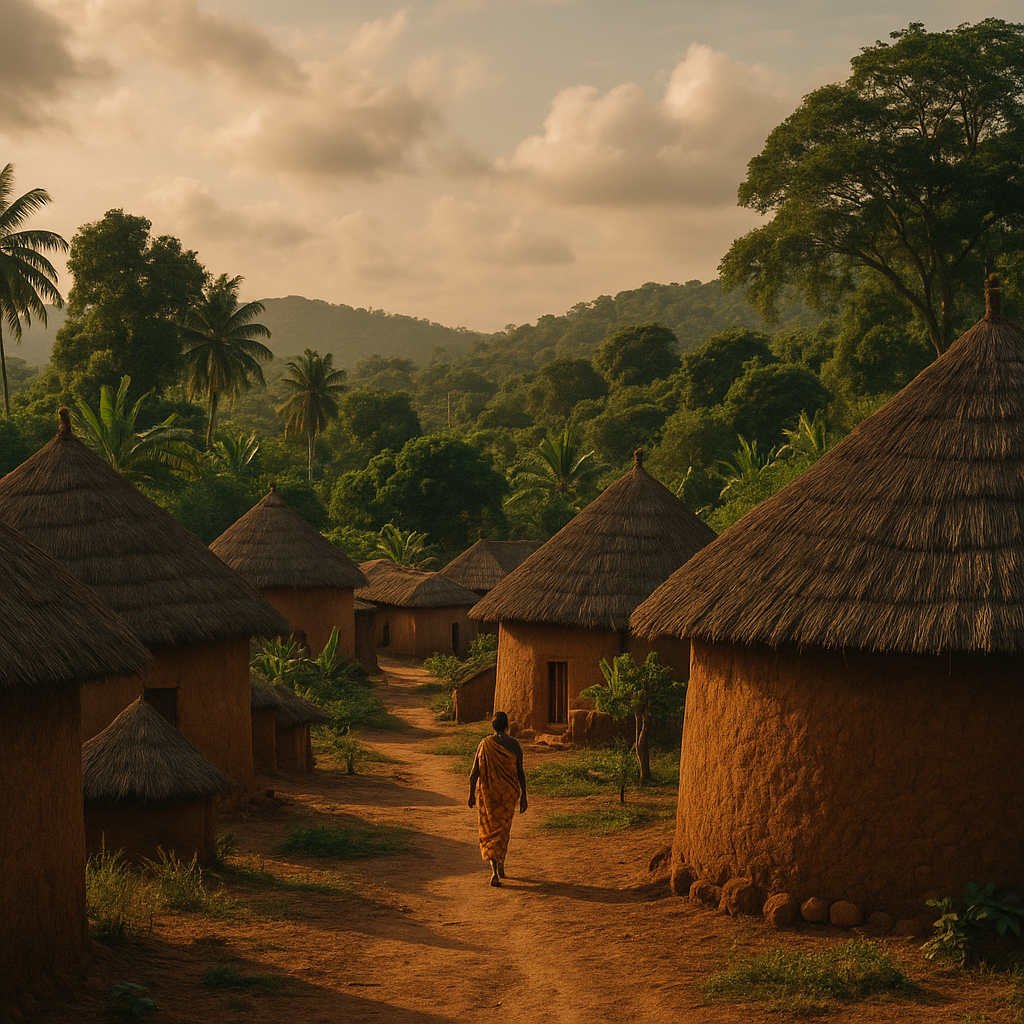
[The Korean Today] Traditional Akan village in Ghana Ashanti region with Kente cloth weaving scene © The Korean Today Editorial
Linguistic Treasures
Akan is renowned for its proverbs, which encapsulate the philosophical wisdom of the Akan people. Expressions like “Obi nkyere abofra nyansa” (No one shows a child the way to wisdom) highlight the intrinsic value placed on self-discovery and learning. The language’s tonal quality, where meaning changes with pitch, adds to its complexity and beauty.
WIA Promise
The WIA Language Institute is committed to supporting the Akan language through digital platforms and educational resources. By collaborating with local communities and linguistic experts, WIA aims to document and promote the language’s unique characteristics, ensuring its vibrancy in the digital age.
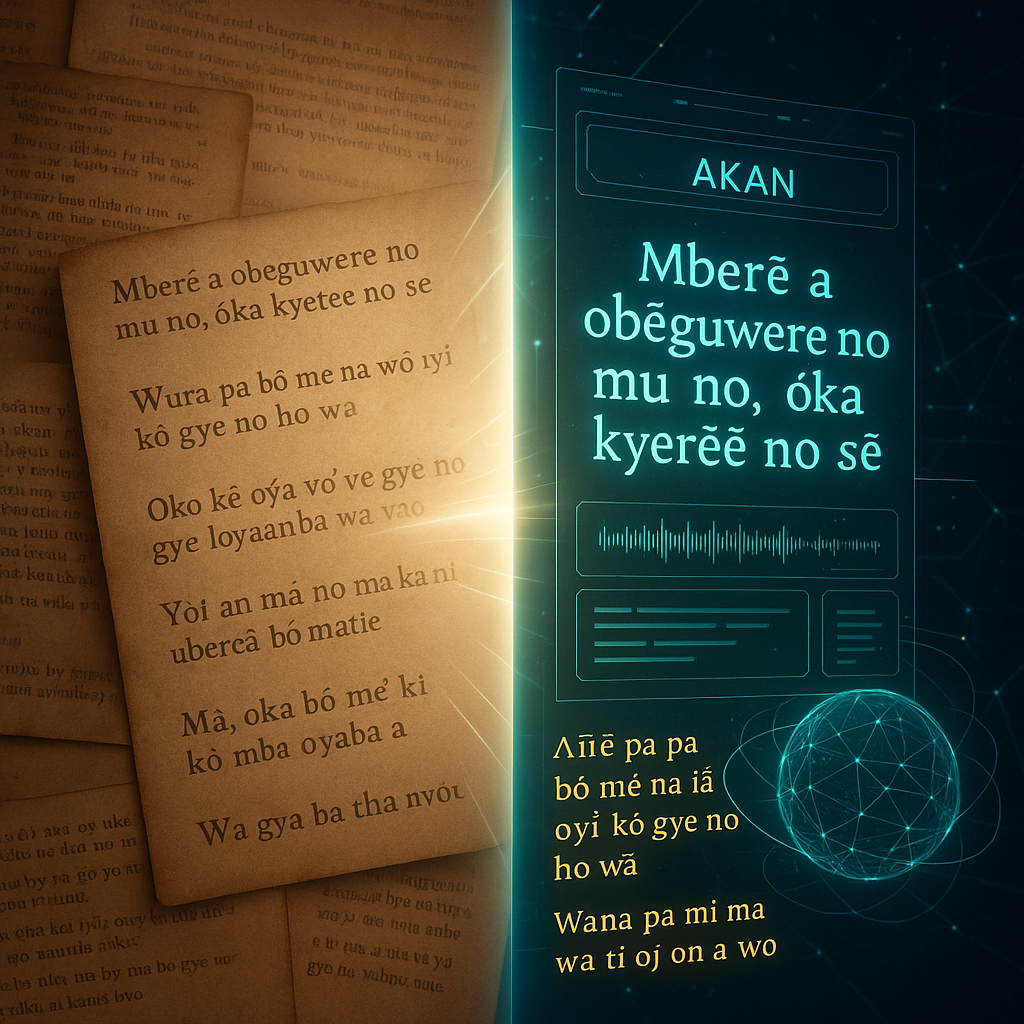
[The Korean Today] Adinkra symbols transforming into digital hologram network connecting globally © The Korean Today Editorial
Future
The future of the Akan language shines bright with initiatives aimed at integrating it into modern technology and educational curricula. As younger generations embrace their linguistic heritage, the language is poised to thrive, bridging past and present with its timeless wisdom and cultural depth.
“Ɛsono a ɔda aponkyerɛne so no, na ɔnni sɛda.”
(The elephant lying on its back does not have to worry about the sun.)
© 2023 WIA Language Institute. Empowering languages, connecting cultures.
<저작권자 ⓒ 코리안투데이(The Korean Today) 무단전재 및 재배포 금지>


















